

Copper (Bisglycinate)
Copper bisglycinate chelate
An essential trace mineral included to maintain the correct copper-to-zinc ratio at therapeutic zinc doses, supporting enzymatic function, iron metabolism, and long-term mineral balance.
The Ingredient Explained
Copper is an essential trace mineral involved in dozens of enzymatic reactions throughout the body, including those that produce energy, support connective tissue, and regulate iron metabolism. It's present in Foundation for a specific and important reason: high-dose zinc supplementation depletes copper. The two minerals compete for absorption through the same intestinal pathway, and at 30 mg of zinc per serving, Foundation delivers a dose that requires copper to be actively balanced. Copper bisglycinate is the chelated form, meaning it's bound to the amino acid glycine for superior absorption and minimal gastrointestinal impact compared to cheaper copper oxide forms.
Why it's in Foundation
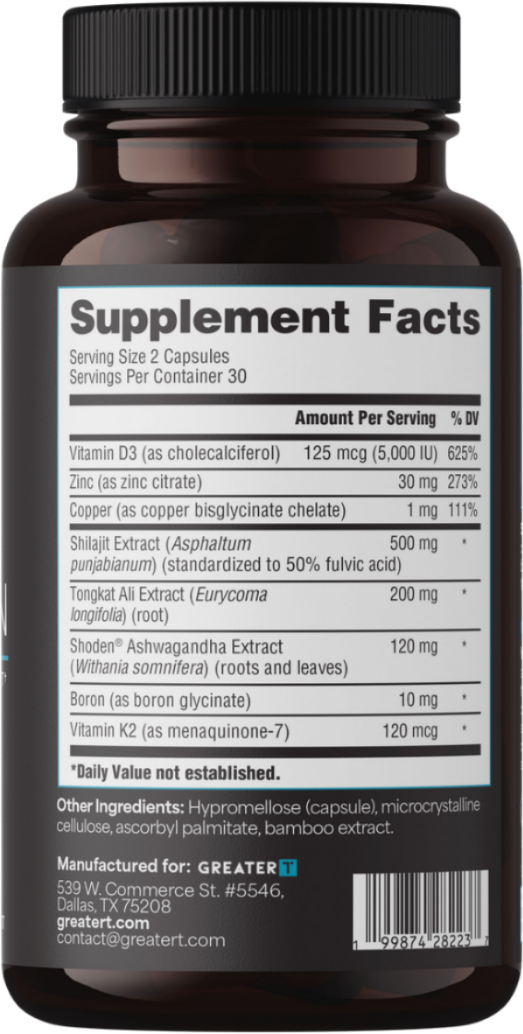
Foundation includes 30 mg of zinc citrate per serving. That dose is intentional and clinically justified. But zinc at that level, taken daily over time, will suppress copper status if copper isn't included to compensate. Copper deficiency has its own consequences including fatigue, immune suppression, and neurological issues that would undermine everything Foundation is designed to support. Including 1 mg of copper bisglycinate maintains the optimal zinc-to-copper ratio of approximately 15 to 1, which is the ratio associated with healthy mineral balance in the research. It's a precision decision, not an afterthought.
Your 90-Day Timeline.
Copper's role in Foundation is protective from day one. While other ingredients are building toward measurable effects, copper is working in the background preventing the mineral imbalance that develops with sustained zinc supplementation.
Long-term copper sufficiency maintains healthy iron metabolism, connective tissue integrity, and the mineral balance that supports overall hormonal health. Consistent daily intake keeps the zinc-copper ratio in the optimal range indefinitely.
Sustained boron supplementation maintains reduced SHBG long-term. The anti-inflammatory effects also compound over time, supporting the overall hormonal environment.
What the research shows
1 mg. The exact amount needed to balance 30 mg of zinc.
Research on zinc and copper interaction consistently identifies a zinc-to-copper ratio of 10 to 15 to 1 as optimal for mineral balance. At 30 mg of zinc, Foundation's 1 mg of copper bisglycinate sits precisely within that range. Studies on copper bisglycinate specifically show superior absorption compared to inorganic copper forms, meaning the full 1 mg is bioavailable and active. This isn't a token inclusion. It's a calculated dose that protects the integrity of the entire mineral profile in Foundation.
View the human study
Zinc and copper balance in supplementation, published review
How it works with other ingredients
Zinc
Copper exists in Foundation specifically because of zinc. The two minerals must be balanced. Copper bisglycinate maintains the correct ratio at therapeutic zinc doses.
Vitamin D3
Copper supports the enzymatic processes involved in D3 metabolism, contributing to the overall hormonal signaling network Foundation supports.
Boron
Both are trace minerals included at precise doses for specific reasons. Together they complete the mineral foundation that supports testosterone production and availability.